
Online Medication Management When Life Already Feels Overwhelming
Online medication management provides psychiatric care through secure video platforms, offering an alternative to traditional in-person appointments. This delivery method allows patients to access psychiatric evaluation and medication monitoring from remote locations, reducing barriers related to transportation, scheduling, and time constraints.
At Santana Mental Health Services, board-certified psychiatric clinicians provide both telehealth and in-person medication management services for children, teens, and adults.
Evidence for Telehealth Medication Management
Research demonstrates that telehealth medication management produces clinical outcomes comparable to in-person care. Meta-analyses indicate that telemental health assessment and treatment outcomes are similar to in-person care across multiple psychiatric conditions. A systematic review of randomized controlled trials found that telehealth interventions for behavioral health disorders generally produce similar outcomes as face-to-face provision of psychiatry services.
Studies of collaborative care models using telemental health medication management have shown significant reductions in depression and anxiety symptoms. In one implementation study, patients with moderate to severe depression or anxiety showed average reductions of 7.27 points on the PHQ-9 and 6.71 points on the GAD-7 after 12 weeks of telemental health medication management, with approximately 65% experiencing response and 45% achieving remission.
Telehealth medication management offers several practical advantages:
Eliminates travel time and transportation barriers
Reduces time away from work, school, or caregiving responsibilities
Facilitates more frequent monitoring during medication initiation or adjustment
Improves treatment adherence and appointment attendance
Evidence-Based Pharmacological Treatments
Anxiety Disorders
Selective serotonin reuptake inhibitors (SSRIs) and serotonin-norepinephrine reuptake inhibitors (SNRIs) are first-line pharmacological treatments for generalized anxiety disorder, social anxiety disorder, and panic disorder. Multiple SSRIs and SNRIs have demonstrated efficacy with effect sizes of 0.37-0.44 in treating anxiety disorders. Among SSRIs, sertraline and escitalopram have been associated with favorable outcomes when considering both remission rates and adverse event profiles.
Treatment typically requires 2-4 weeks before anxiolytic effects begin, with continued improvement over subsequent weeks to months. Clinical guidelines recommend starting at low doses and titrating gradually, particularly in patients with anxiety disorders who may be more sensitive to medication side effects. Continuation of treatment for at least 12 months is recommended following response to reduce relapse risk.
Depressive Disorders
SSRIs and SNRIs are also first-line treatments for major depressive disorder in adults. Evidence from randomized controlled trials supports the efficacy of multiple antidepressant medications, with venlafaxine and escitalopram showing particular effectiveness in primary care populations. Network meta-analyses have identified duloxetine, venlafaxine, and escitalopram among the more effective options for generalized anxiety disorder with comorbid depression.
Attention-Deficit/Hyperactivity Disorder (ADHD)
FDA-approved medications for ADHD include stimulants (methylphenidate and amphetamine formulations) and non-stimulants (atomoxetine, extended-release guanfacine, and extended-release clonidine). Stimulant medications have effect sizes around 1.0 for treating ADHD symptoms in both children and adults, while non-stimulant medications have effect sizes around 0.7.
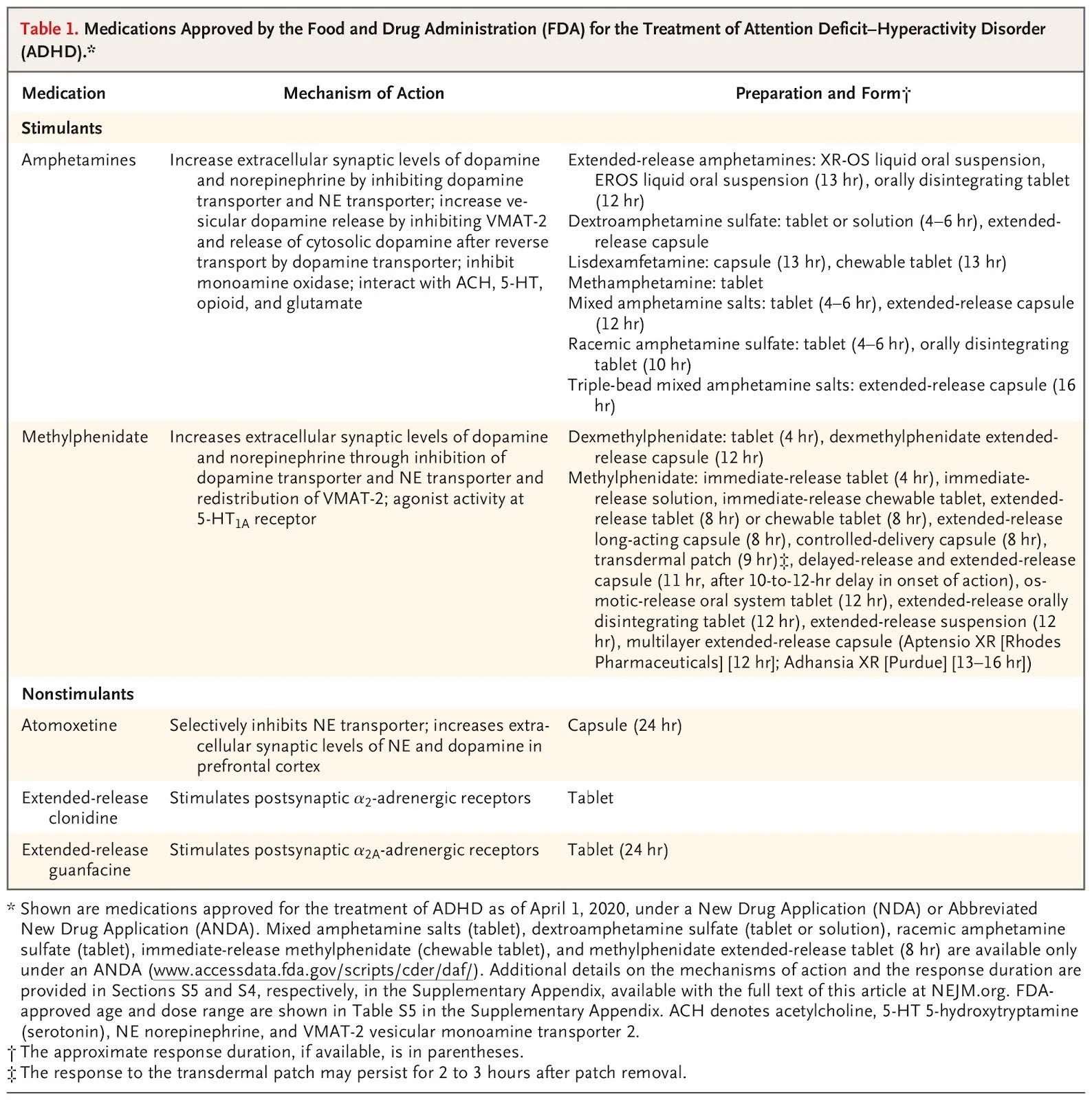
Table 1 Medications Approved by the Food and Drug Administration (FDA) for the Treatment of Attention Deficit–Hyperactivity Disorder (ADHD).* undefined
Clinical practice guidelines from the American Academy of Pediatrics recommend stimulant medications as first-line pharmacological treatment for ADHD in children aged 6 years and older, with non-stimulant medications as alternatives when stimulants are ineffective or poorly tolerated. For adults, methylphenidate and lisdexamfetamine are recommended as first-line options, with atomoxetine as a second-line treatment.
Bipolar Disorder
Pharmacological treatment is central to managing bipolar disorder. First-line options for acute mania include lithium, quetiapine, valproate, asenapine, aripiprazole, paliperidone, risperidone, and cariprazine, either as monotherapy or in combination. For bipolar depression, FDA-approved treatments include olanzapine-fluoxetine combination, quetiapine, lurasidone, cariprazine, and lumateperone. Lithium and lamotrigine are also recommended as second-line agents for acute bipolar depression.
For maintenance treatment to prevent recurrence, lithium remains one of the most effective medications, with a risk ratio of 0.62 for relapse compared to placebo. Other first-line maintenance options include quetiapine, valproate, lamotrigine, asenapine, and aripiprazole.
Substance Use Disorders
Evidence-based treatments for substance use disorders typically combine pharmacological and psychosocial interventions. For alcohol use disorder, FDA-approved medications include naltrexone, acamprosate, and disulfiram. Naltrexone has demonstrated reductions in return to heavy drinking and return to any drinking. Gabapentin, though not FDA-approved for this indication, has shown efficacy in increasing abstinence rates.
For opioid use disorder, medications including buprenorphine, methadone, and naltrexone are evidence-based treatments that should be combined with psychosocial support. For stimulant use disorders, no FDA-approved medications currently exist, though contingency management and cognitive-behavioral therapy have demonstrated efficacy. Some evidence supports off-label use of bupropion, mirtazapine, or the combination of bupropion and long-acting injectable naltrexone for methamphetamine use disorder.
What to Expect From Online Medication Management
The initial evaluation includes a comprehensive psychiatric assessment:
Review of current symptoms and psychiatric history
Medical history and current medications
Assessment of functional impairment
Discussion of previous treatments and responses
Development of an individualized treatment plan
When medication is recommended, prescribing follows established clinical guidelines and FDA-approved indications. Treatment selection considers symptom severity, comorbid conditions, prior treatment response, potential adverse effects, drug interactions, and patient preferences.
Follow-up appointments allow for:
Monitoring of symptom changes and treatment response
Assessment of medication tolerability and side effects
Dose adjustments based on clinical response
Coordination with other healthcare providers when appropriate
Treatment plans may include:
Evidence-based pharmacotherapy
Referrals for psychotherapy when indicated
Behavioral interventions and lifestyle modifications
Management of co-occurring conditions
Clinical Indications for Psychiatric Evaluation
Professional psychiatric evaluation is recommended for:
Persistent depressed mood or loss of interest lasting two weeks or longer
Excessive worry or anxiety interfering with daily functioning
Significant changes in sleep, appetite, or energy level
Difficulty concentrating or completing tasks at work or school
Manic or hypomanic symptoms including decreased need for sleep, racing thoughts, or impulsive behavior
Suicidal thoughts or self-harm behaviors
Problematic substance use affecting health, relationships, or functioning
Early intervention can improve outcomes and prevent progression of symptoms.
Accessing Online Medication Management
To initiate care:
Contact the practice to schedule an initial evaluation
Complete required intake forms and consent documents
Ensure access to a private location and reliable internet connection for video appointments
Prepare a list of current medications and previous treatments
The initial appointment focuses on understanding the presenting concerns, completing a comprehensive assessment, and developing an appropriate treatment plan based on clinical guidelines and individual needs.
At Santana Mental Health Services, medication management follows evidence-based protocols and is tailored to each patient's clinical presentation, treatment history, and personal circumstances.
References
Pharmacologic Treatment of Attention Deficit–Hyperactivity Disorder. Cortese S. The New England Journal of Medicine. 2020;383(11):1050-1056. doi:10.1056/NEJMra1917069.
